Asana Review: Is It Too Much Tool for a Solo Freelancer?
Last updated: June 2026

Asana is one of the best project management tools for freelancers – especially if you work directly with clients. The free plan handles most solo workflows, and Starter ($10.99/mo) adds timelines and automations that genuinely save time. The main catch: no built-in time tracking. If that’s a dealbreaker, check our ClickUp review. For everyone else, Asana’s polish and ease of use make it worth the price.
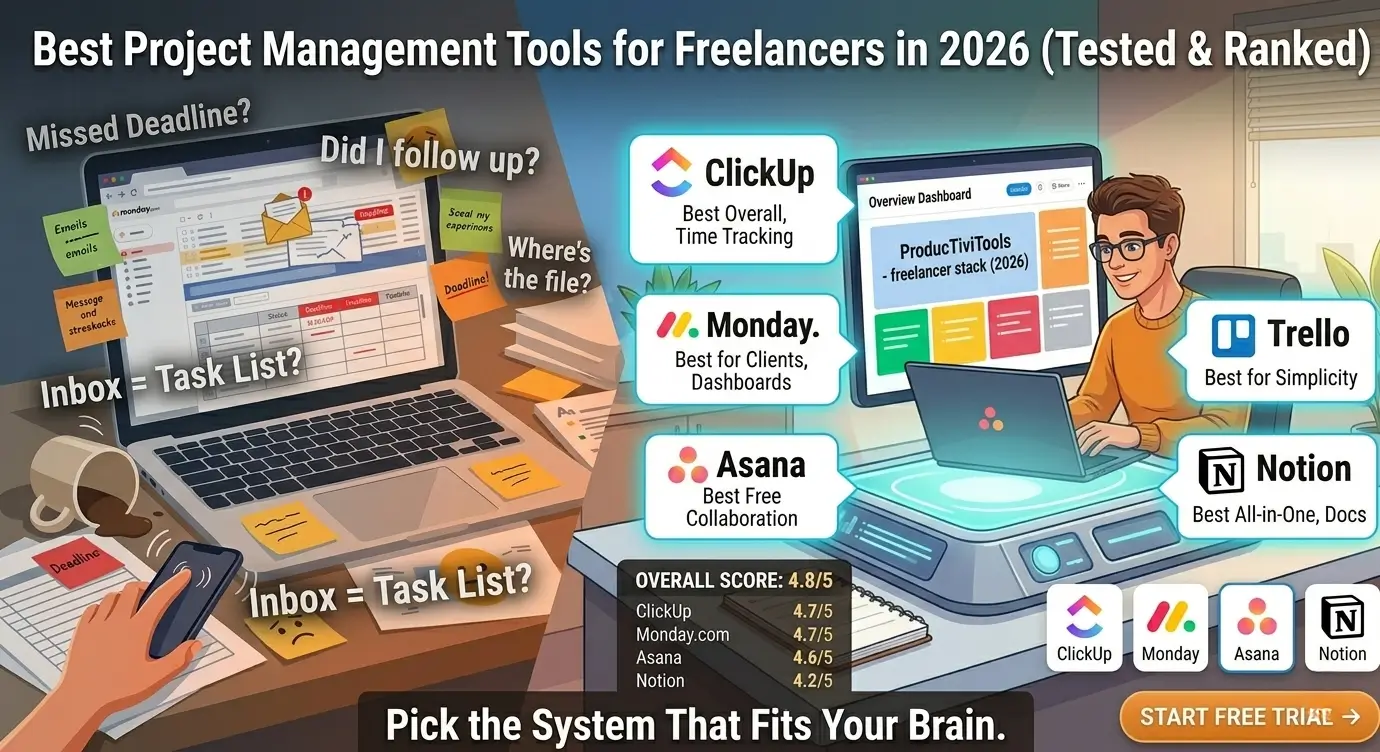
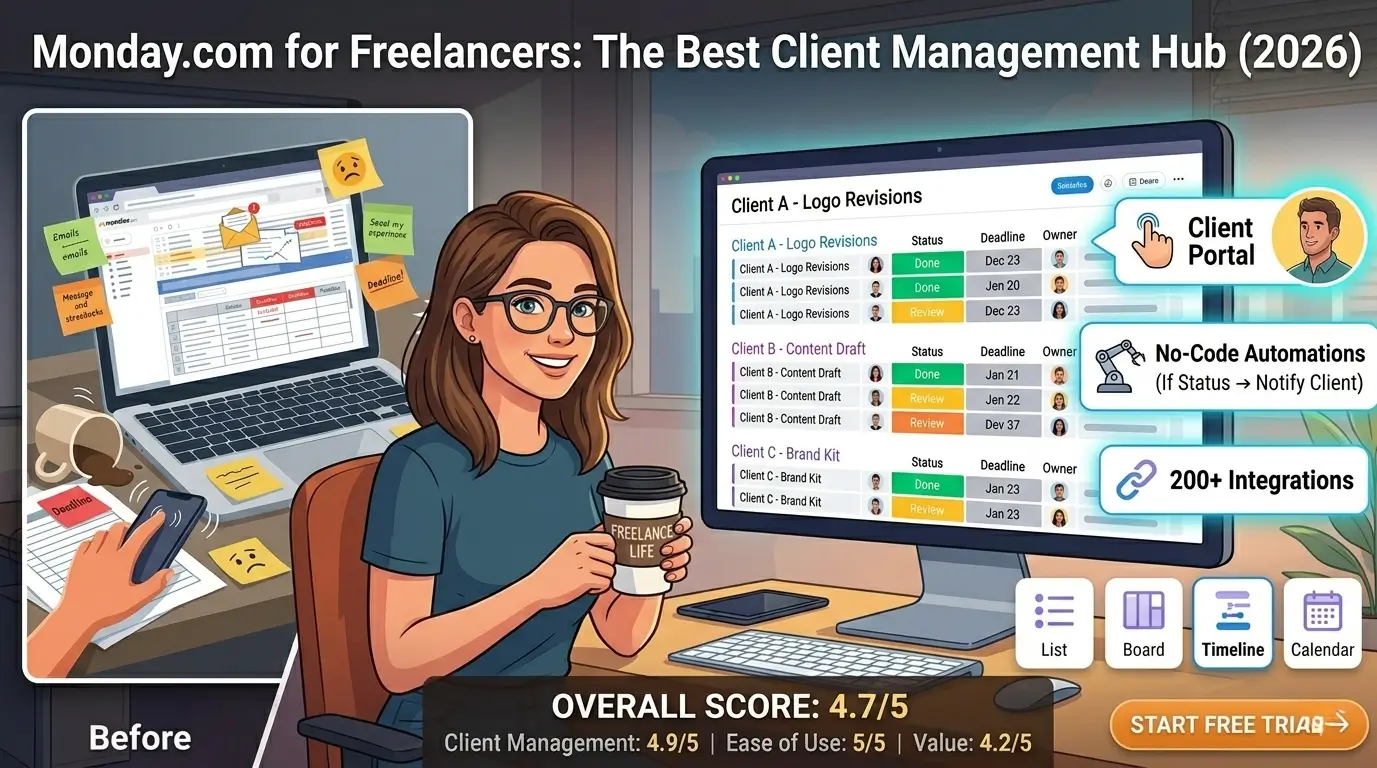
Sound familiar? the before picture
Looking for the best asana review for freelancers information? This guide gives you everything you need. We cover the top choices for asana review for freelancers based on real testing, so you can pick the right option with confidence.
This guide covers everything about asana review freelancers. Whether you are comparing options or looking for a detailed review, we break down the best asana review freelancers options so you can decide with confidence.
It’s 11pm. You’ve got three active client projects, a new brief that landed this afternoon, and somewhere in your email there’s a revision request you meant to action two days ago. Your to-do list is a mix of sticky notes, a half-maintained spreadsheet, and a voice memo you recorded while driving. Nothing is clearly prioritized. Nothing has a real deadline attached to it. You’re not lazy – you’re just operating without a system.
That’s exactly where a lot of freelancers are when they start looking at project management tools. Not because they’re disorganized by nature, but because nobody teaches you how to run client work at scale when you’re freelancing. You figure it out as you go, and by the time you realize your current setup is breaking down, you’re already behind.
The after picture is different. Imagine opening your laptop in the morning and seeing a clean task list sorted by deadline. Every client project has its own space. Deliverables are broken into manageable steps. When a client asks “where are we on this?” you can pull up the project board and show them in real time. Your professional reputation goes up. Your stress goes down. You actually finish work before midnight.
That’s what a good project management tool can do – and Asana is one of the tools that gets you there fastest.
out of 5
Pros
- Clean interface – one of the easiest to learn in the category
- Generous free plan: unlimited tasks, projects, and collaborators
- Timeline view included on free plan
- Solid automation rules on Starter ($10.99/mo)
- Connects with 200+ tools including Slack, Google Workspace, Zapier
Cons
- No built-in time tracking – needs a third-party integration
- Subtasks don’t appear in parent project views by default
- Portfolios and workload features locked to Advanced plan ($24.99/mo)
- Can get pricey if you need the higher tiers
What is Asana: Asana review for freelancers
Asana launched in 2008 and has since become one of the most recognizable names in project management. It’s marketed heavily at teams and enterprises – but freelancers have been quietly using it for years to manage client deliverables, track deadlines, and stop projects from disappearing into chaos.
At its core, Asana is a task and project manager. You create projects, add tasks, assign due dates, and track everything through multiple views – list, board, calendar, and timeline. What makes it stand out from basic to-do apps is how well those pieces work together. Asana feels like it was designed by people who actually manage projects for a living, not just developers who wanted to build a prettier database. That coherence matters a lot when you’re under deadline pressure and need to think about the work, not the tool.
For freelancers, it hits a genuine sweet spot: professional enough to share with demanding clients, simple enough that you’re not spending 20 minutes reading docs before you can use it, and flexible enough to handle one small project or eight concurrent retainers. That’s the bridge from overwhelmed to organized.
Getting started with Asana – real setup experience
Setup is surprisingly fast. You can go from a blank workspace to your first real project board in under 15 minutes – probably less if you import tasks from a spreadsheet. The onboarding flow asks a few questions about how you work, then drops you into a pre-built project template you can customize or ignore. Either way, you’re not staring at a blank screen wondering what to do next.
Creating your first project is intuitive. Name it, pick a view (list or board to start), add your tasks, set due dates. Asana’s task model is clean – each task has a name, description, assignee, due date, and subtasks, all accessible from a side panel without leaving your main view. That side panel is one of those small design decisions that saves real time once you’re in it daily.
Inviting a client as a guest takes about 30 seconds. You share the project link, they create a free account if they don’t have one, and they can view tasks, leave comments, and update statuses right away. No training call needed. That alone – the ability to onboard a client without friction – is worth a lot for a freelancer managing multiple relationships.
Asana pricing
Asana’s pricing is straightforward. All paid plans are per-user, billed annually. Most freelancers will land on either the free plan or Starter, so that’s where to focus your attention.
| Plan | Price | Key Features for Freelancers |
|---|---|---|
| Personal (Free) | $0 | Unlimited tasks, unlimited projects, unlimited collaborators, list/board/calendar/timeline views, basic reporting |
| Starter RECOMMENDED | $10.99/mo billed annually | Everything in Free + automations, custom fields, project intake forms, milestones, advanced search, unlimited dashboards |
| Advanced | $24.99/mo billed annually | Everything in Starter + portfolios, workload view, advanced reporting, time tracking integrations, approvals |
| Enterprise | Custom | SSO, advanced admin controls, data residency, priority support – overkill for freelancers |
The honest take: start on the free plan and use it on real projects for a few weeks. Most solos never need to upgrade. Once you’re juggling more than two active client projects with recurring workflows, the Starter plan at $10.99/month starts making financial sense. The automations alone – things like auto-creating a follow-up task when you close a deliverable – can save 30 minutes a week without any code.
Key features worth knowing about
Timeline view
Timeline view is the feature that makes Asana click for deadline-heavy freelance work. You lay out all your tasks on a horizontal calendar and drag to resize or reposition them. When a client pushes a deadline, you grab the block and shift it – Asana flags any downstream dependencies that need to move too. For multi-phase projects like website builds or brand identity packages, this visual is genuinely useful. It’s also something clients can understand immediately without you exporting a spreadsheet or pulling out Miro.
Automations
Automation rules (available on Starter and up) are the most underrated feature for freelancers running recurring work. You build rules with simple “if this, then that” logic – no technical knowledge needed. A few that actually save time in practice:
- When a task’s due date passes with status still “In Progress” – highlight it and send a notification
- When you mark a task “Complete” – auto-create a follow-up invoicing task
- When a new project is created from a template – assign the kickoff task to yourself automatically
- When a task moves to “Client Review” – notify the client via email without you lifting a finger
These compound over time. Run four recurring client projects and you’re realistically saving 30 to 60 minutes a week just by cutting the manual overhead of task creation and status updates.
Client collaboration
This is where Asana genuinely earns its reputation. You invite clients as guests to specific projects – unlimited guests on all plans – and the interface is clean enough that they actually use it. Compare this to Notion or ClickUp, where clients sometimes get confused and fall back to emailing you anyway. You control exactly what guests see, keeping your internal notes, billing details, and other client projects completely private. Threaded comments on tasks keep communication in context, which solves the “where did we discuss this?” problem that haunts email-based project management.
Integrations
Asana connects natively with over 200 tools. The most useful for freelancers: Slack (create tasks directly from messages), Google Drive (attach Docs and Sheets to tasks), Zoom (auto-create follow-up tasks from meeting recordings), and Harvest or Toggl for time tracking. The time tracking gap is real – there’s no native timer – but the Harvest integration is tight enough that it barely feels like a workaround. You start and stop timers on Asana tasks without leaving the app.
Honest pros and cons
What Works Well
- One of the cleanest, most intuitive interfaces in the category
- Free plan is genuinely useful – unlimited projects and collaborators
- Timeline view helps manage deadline-heavy projects visually
- Automation rules on Starter save real time for recurring work
- Clients actually use it – low onboarding friction
- Stable, reliable – rarely goes down at bad moments
What Could Be Better
- No built-in time tracking – you’ll need Harvest or Toggl alongside it
- Subtask visibility in parent views is clunky by default
- Advanced features like portfolios cost $24.99/mo – steep for solos
- No built-in docs or notes feature (Notion or ClickUp do this better)
Who should use Asana
Asana is a strong fit if you work directly with clients on deliverables and want to share project boards without friction, run multiple concurrent projects and need visual timeline management, value a clean focused interface over an everything-in-one tool, or are getting started and want a free plan with no seat or project limits. It’s also the natural choice if you’re already embedded in Google Workspace or Slack – those integrations are solid and well-maintained.
Asana probably isn’t right for you if native time tracking is non-negotiable (you’ll always be running a separate timer app), you manage deeply nested projects where subtask hierarchy is critical, you want an all-in-one tool that handles docs and wikis internally, or you need workload management across multiple contractors (that’s an Advanced plan feature at $24.99/mo).
Asana vs ClickUp vs Monday.com
Here’s how Asana compares against the two tools it’s most often stacked against. For a deeper breakdown of just those two, see our ClickUp vs Asana comparison.
| Criteria | Asana | ClickUp | Monday.com |
|---|---|---|---|
| Free Plan | Unlimited projects & users Best | Unlimited tasks, limited features | 2 seats max, very limited Weakest |
| Ease of Use | Very clean UI, fast to learn Excellent | Powerful but complex, learning curve Moderate | Very visual, beginner-friendly |
| Time Tracking | Integration only (Harvest, Toggl) | Built-in native timer Best | Integration only No native |
| Client Sharing | Unlimited guests, all plans Best | Guest access, limited on free | Per-seat pricing for guests Expensive |
| Paid Plan Price | $10.99/mo Mid-range | $7/mo (Unlimited) Cheapest | $9/mo (Basic), $12/mo (Standard) |
Short version: Asana wins on polish and client collaboration. ClickUp wins on raw features and built-in time tracking. Monday wins on visual simplicity but loses badly on free plan generosity and guest pricing. For most freelancers who prioritize professionalism and ease of client onboarding over feature depth, Asana is the right call. If you’re more features-first and bill hourly, read the Monday.com review and our ClickUp comparison before deciding.
Frequently asked questions
What is the best asana review for freelancers?
The best asana review for freelancers in 2026 combines ease of use, solid features, and fair pricing. After testing multiple options, the top picks for asana review for freelancers stand out for freelancers who need reliability without complexity.
How do I find the right asana review for freelancers?
Finding the right asana review for freelancers starts with identifying your core needs. The best asana review for freelancers options offer free trials, so you can test before committing. Look for asana review for freelancers tools with strong user reviews and responsive support.
Is investing in asana review for freelancers worth it?
Yes, finding a quality asana review for freelancers is absolutely worth it. The right asana review for freelancers saves freelancers hours every week and helps maintain a professional image with clients. Top asana review for freelancers options typically pay for themselves within the first month.
What makes a good asana review freelancers?
A good asana review freelancers should be easy to use, affordable, and reliable. The best asana review freelancers options in 2026 offer strong integrations and excellent support for freelancers.
How to choose the right asana review freelancers?
Choosing the right asana review freelancers starts with your workflow needs. Look for asana review freelancers tools that offer a free trial so you can test before committing. The top asana review freelancers picks on this list all have free tiers.
Is asana review freelancers worth the investment?
Yes, finding the best asana review freelancers is worth the investment. Top asana review freelancers tools save freelancers 5+ hours per week, which quickly pays for itself in client hours recovered.
Final verdict
Yes – Asana is the best PM tool for client-Facing freelancers
Asana is the cleanest, most professional project management tool for freelancers who work closely with clients. The free plan is genuinely useful for solos managing a handful of projects, and the Starter plan at $10.99/month unlocks automations and custom fields that pay for themselves quickly. The real gap is built-in time tracking – you’ll need Harvest or Toggl running alongside it. But if your workflow doesn’t hinge on a native timer, Asana is an excellent choice that your clients will actually enjoy using alongside you.
Best way to start: try the free plan, import your current projects, share a board with one client, and give it two weeks on real work. If you find yourself wanting to automate recurring workflows or visualize sequential deadlines, the Starter upgrade is a clear yes.
Still weighing your options? Check out our ClickUp vs Asana comparison – we ran both tools through real freelance project scenarios to see which holds up better under pressure.
Ready to try Asana for free?
No credit card required. Set up your first project in under 5 minutes and invite a client to collaborate – on any plan.